
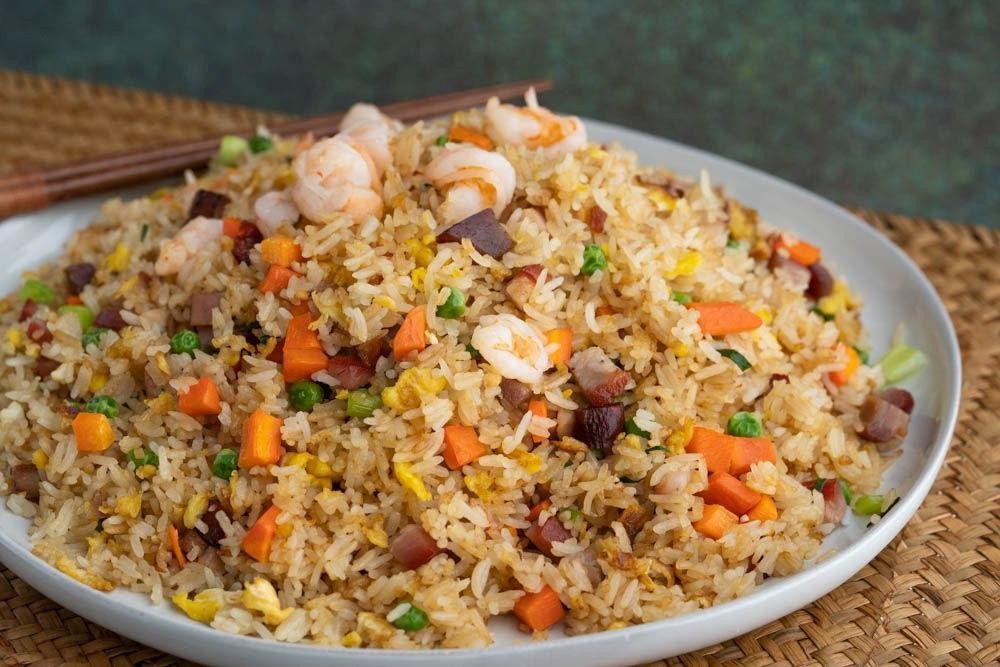
Origin: It comes from the city of Yangzhou in Jiangsu Province. Several legends credit its creation to Qing dynasty figures or even earlier dynasties, but no single origin is reliably documented. What is clear is that the dish is tied to Huaiyang cuisine, which values refined knife work, balance, and the natural flavor of ingredients.
Defining traits:
- Egg-coated grains: The beaten egg is traditionally mixed into the rice before frying, so each grain is lightly gilded. The old name “broken gold rice” refers to this look.
- Pale color: There is little or no dark soy sauce. The rice should look golden and bright, never brown.
- Small, even dice: Ingredients are cut to about the size of a pea so that every spoonful has a bit of everything.
- Typical ingredients: Shrimp, ham (Jinhua ham in the traditional version), peas, scallion, and sometimes mushrooms, bamboo shoots, or chicken. Some versions add a splash of stock for savory depth.
- Seasoning: Salt, white pepper, and a little Shaoxing wine.
Texture goal: Each grain should be separate, glossy, and tender, with no clumping.